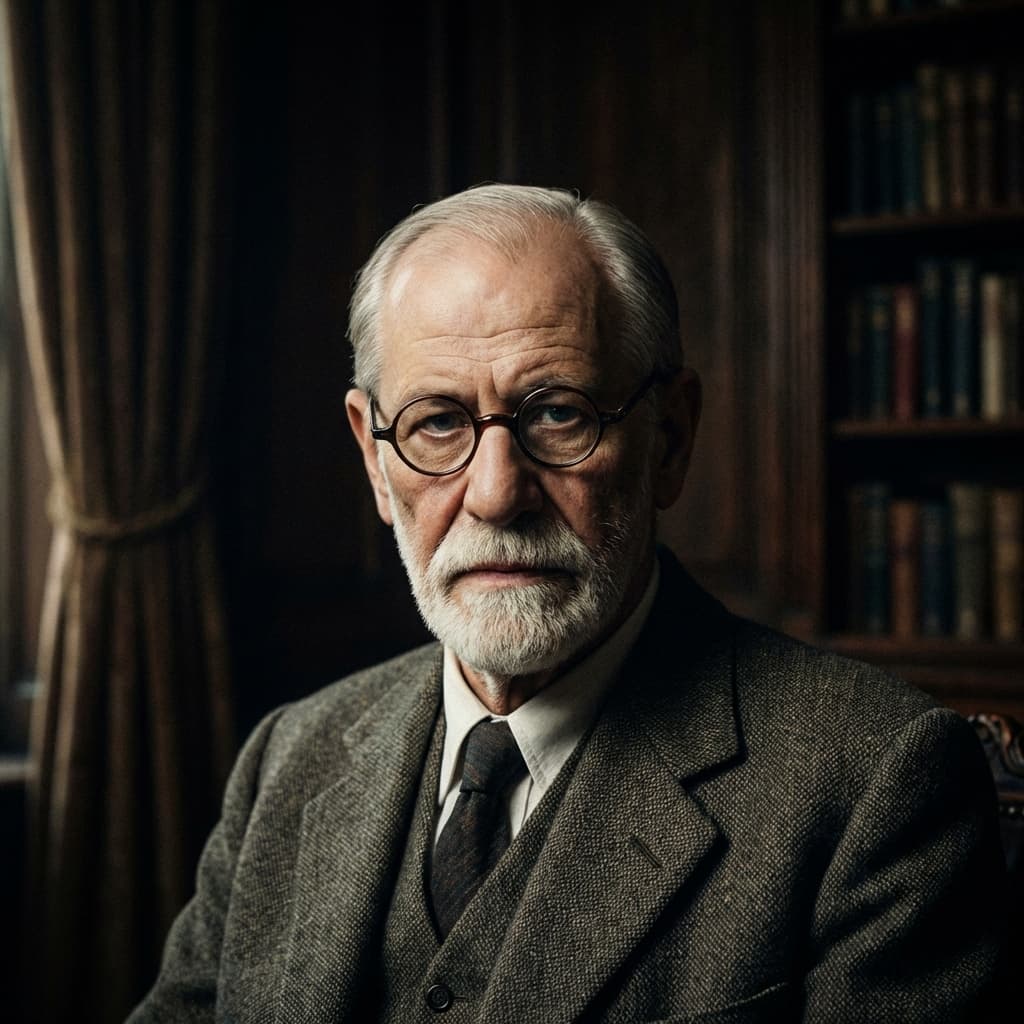
Sigmund Freud
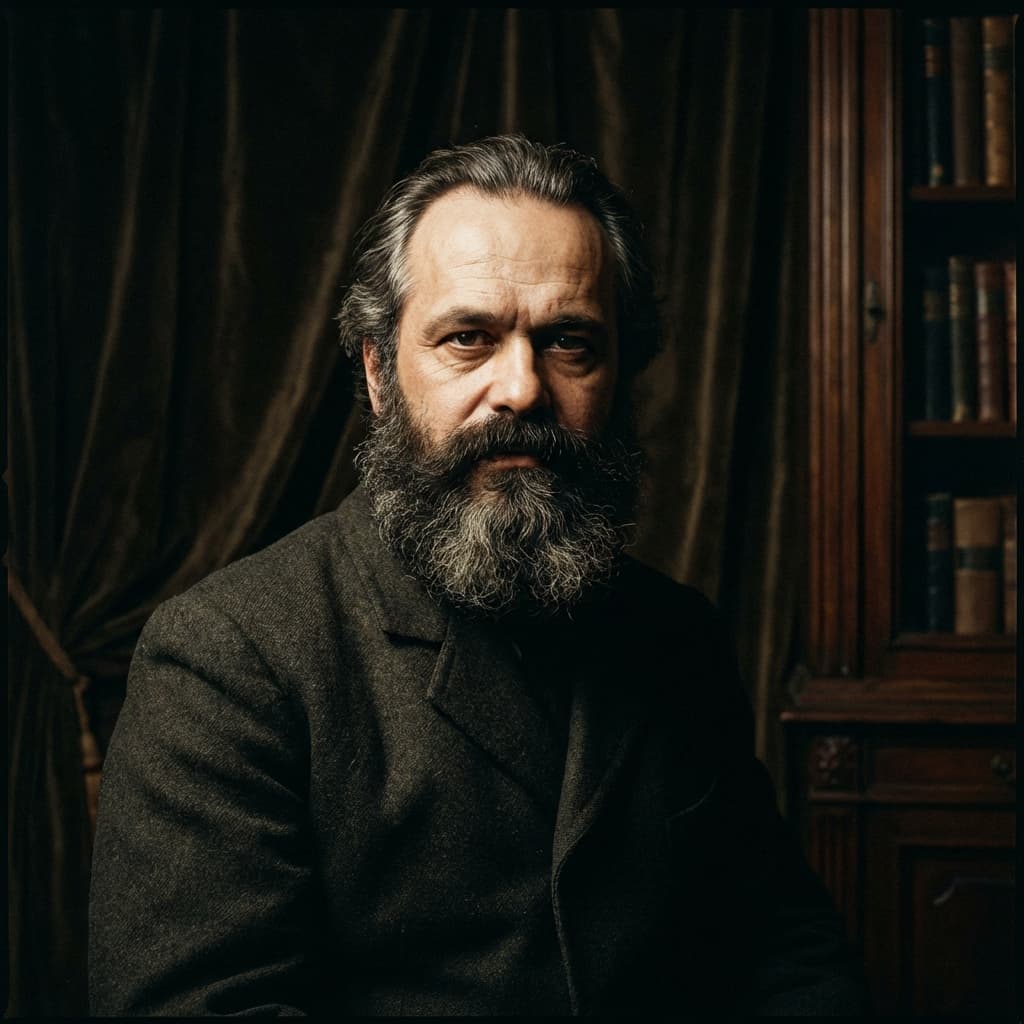
Karl Marx

Nikola Tesla
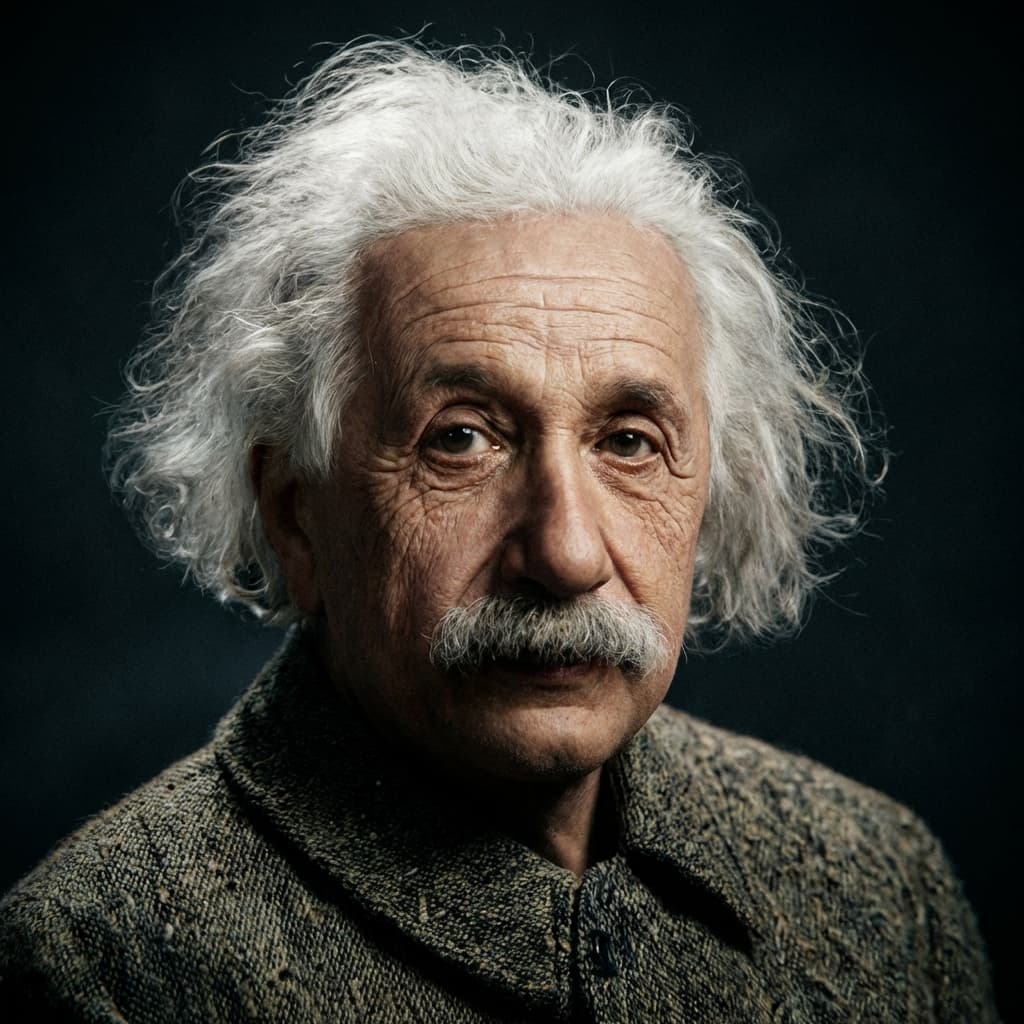
Albert Einstein
Read by Sigmund Freud, Karl Marx, Nikola Tesla, Albert Einstein and 2 others
classic literature
book recommendations
Goethe
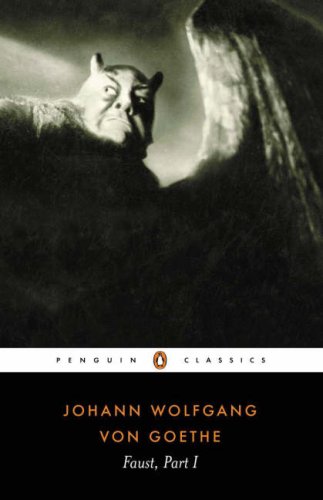
Faust
Einstein books
Tesla books
Marx books
Freud books
genius reading lists
most influential books of all time
what geniuses read
elite reading habits
How Goethe's Faust became the secret obsession of four minds that changed the world - and why it still matters today.

What if one book could reshape how we understand electricity, the unconscious mind, capitalism, and the universe itself?
In 1808, the German poet Johann Wolfgang von Goethe published the first part of Faust - a tragic play about a scholar who trades his soul to the devil in exchange for unlimited knowledge. Goethe would spend sixty years writing it, finishing Part Two just months before his death in 1832.
Two centuries later, Faust remains the single most performed play on German-language stages and is widely considered the greatest work of German literature ever written. But its influence extends far beyond literary circles. Four of the most consequential thinkers in modern history - Albert Einstein, Nikola Tesla, Karl Marx, and Sigmund Freud - didn't just read Faust. They were consumed by it. They internalized it, returned to it across decades, and some even credited it with shaping their most important ideas.
This is not a coincidence. This is a pattern - and the pattern reveals something profound about the kind of knowledge that builds world-changing minds.
Perhaps the largest section of Albert Einstein's personal library didn't belong to physics. It belonged to Goethe. Einstein owned the German author's collected works in a 36-volume edition, plus an additional twelve volumes, two volumes on optics, and a separate edition of Faust. He kept a bust of Goethe in his study and regularly quoted the playwright to his German-speaking assistants.
“— Albert Einstein, in a 1932 letter to Leopold CasperI admire [Goethe] as a poet without peer, and as one of the smartest and wisest men of all time.
”
Einstein's relationship with Goethe wasn't casual admiration - it was intellectual kinship. While Einstein's scientific training was rooted in empiricism and mathematics, his philosophical instincts were deeply Goethean: a commitment to perceiving the hidden unity beneath apparent chaos, a reverence for nature as a whole system rather than a collection of parts.
Faust dramatizes exactly this tension. Its protagonist is a scholar who has mastered every academic discipline yet feels he understands nothing. He yearns to grasp the forces that hold the universe together - not through formulas, but through direct experience.
For the man who spent a decade developing the theory of general relativity, who believed imagination was more important than knowledge, Goethe's restless scholar wasn't just a character. He was a mirror.
If Einstein's connection to Faust was philosophical, Nikola Tesla's was nothing short of mystical.
Tesla didn't just admire Faust. He memorized the entire text - and could recite it forward and backward. He used passages from the play as a form of meditation, a way to quiet his hypersensitive mind against the overwhelming noise of the world around him. Tesla spoke eight languages, and he read Faust in Goethe's original German.
Then came the afternoon that changed the world.
In February 1882, Tesla was walking through a park in Budapest with his friend Antal Szigety. The sun was setting, and Tesla, as was his habit, began reciting from memory. The passage was from Faust, Part One - Faust gazing at the retreating sun and dreaming of soaring above the Earth to follow its light.
“— Nikola Tesla, recalling the moment he conceived the AC motor while reciting FaustEven while I was speaking these glorious words, the vision of my induction motor, complete, perfect, operable, came into my mind like a flash.
”
In that moment - mid-verse, mid-step - the vision came.
Tesla saw the complete design for the alternating current induction motor materialize in his mind. Not a fragment, not an approximation - the full, working blueprint. He grabbed a stick and sketched the diagrams in the sand. They were the exact same diagrams he would present six years later to the American Institute of Electrical Engineers - the invention that would power the modern world.
Poetry gave Tesla what years of engineering calculations could not: a breakthrough that arrived whole, delivered by a 200-year-old play about a man who refused to accept the limits of human understanding.
Karl Marx's engagement with Faust was darker, more combative, and entirely characteristic of the man himself.
Marx was a voracious reader of Goethe. Contemporaries who knew him well noted that he was a constant reader of the German poet's works, and both Marx and his collaborator Friedrich Engels frequently quoted Faust in their writings and conversations. In an 1847 essay, Marx analyzed Goethe himself through a distinctly Faustian lens, arguing that the poet contained two warring souls: one a cautious bourgeois administrator, the other a rebellious genius who saw through the oppressive structures of society.
But it was a specific line from Faust that became Marx's personal mantra - and it didn't come from the hero. It came from the devil.
“— Mephistopheles, in Goethe's Faust - Karl Marx's favorite quote, which he reportedly chanted repeatedlyEverything that exists deserves to perish.
”
Multiple biographers confirm that Marx would recite this line obsessively. It captures something essential about his worldview: not reform, but annihilation of the existing order. The idea that all current structures - economic, social, moral - are not just flawed but ripe for destruction.
Marx also drew directly on Faust in his most important theoretical work. In the 1844 Economic and Philosophic Manuscripts, he quoted specific passages from the play to illustrate the transformative and corrupting power of money in society. For Marx, Goethe's depiction of Mephistopheles' magic - the ability to make the ugly beautiful, the weak powerful, the unloved desirable - was a precise literary metaphor for what money does to human relationships under capitalism.
Where Einstein found kinship in Faust the seeker and Tesla found inspiration in Faust the dreamer, Marx found his truest reflection in Mephistopheles the destroyer.
Sigmund Freud's relationship with Goethe might be the deepest of all four.
It began before psychoanalysis even existed. As a young man in 1873, Freud attended a public reading of an essay on nature attributed to Goethe. He later described the experience as the decisive moment that led him to abandon his interest in law and pursue the study of medicine instead. The essay - which Freud called "incomparably beautiful" - set him on the path that would eventually produce the most influential theory of the human mind in modern history.
Goethe became Freud's most quoted intellectual predecessor. According to the Concordance, Freud referenced Goethe over 110 times across his body of work - more than any other writer or thinker. Goethe appeared in Freud's own dreams alongside family members and close friends, as if the long-dead poet were a personal companion. Faust held a special place. Freud frequently quoted the play in his writing, and - in a telling pattern - he especially favored the lines of Mephistopheles. He saw himself, half-jokingly, as a kind of metapsychological sorcerer in the tradition of Goethe's devil: someone who descends into darkness to bring forbidden knowledge to the surface.
“— Goethe's Faust - a line Freud quoted repeatedly across his published worksWhat thou hast inherited from thy fathers, acquire it to make it thine.
”
The connection runs even deeper than citation. Goethe's concept of Trieb - the German word for instinct, drive, and mental impulse - became a core building block of psychoanalytic theory. Faust's internal war between his aspirations and his appetites, between reason and desire, between the conscious will and the forces lurking beneath it, anticipated the very architecture of the psyche that Freud would later formalize as the Id, Ego, and Superego.
In 1930, Freud was awarded the Goethe Prize by the city of Frankfurt - one of Germany's most prestigious literary honors. It was a fitting recognition. The father of psychoanalysis had spent his entire career excavating the exact territory that Goethe mapped first: the treacherous, exhilarating landscape of the human soul.
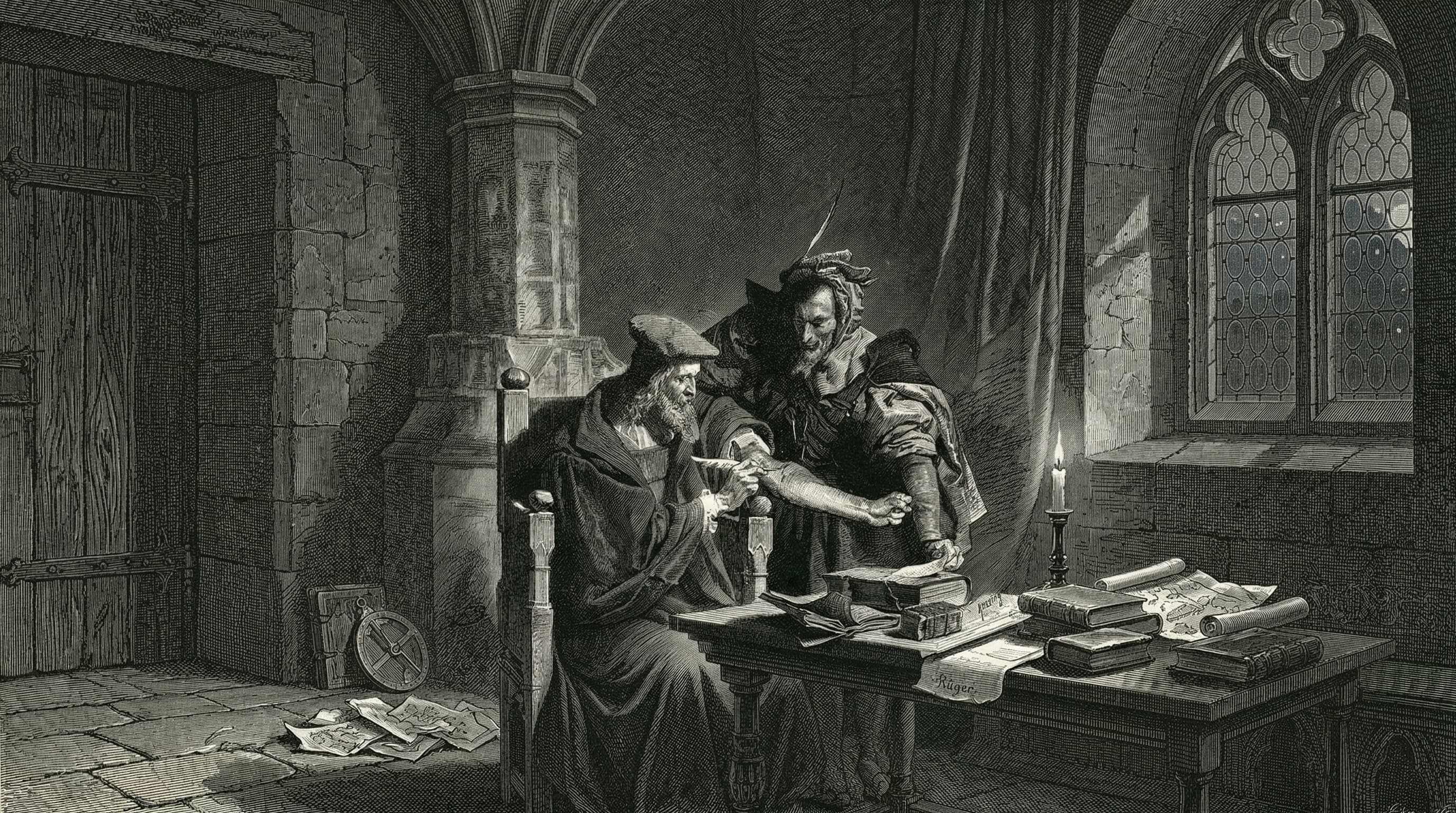
Four thinkers. Four entirely different fields. One book.
Einstein revolutionized physics. Tesla electrified the world. Marx reimagined economics and politics. Freud rewired our understanding of the mind. They lived in different decades, held radically different beliefs, and pursued entirely separate ambitions. Yet all four were drawn to the same 200-year-old play about a man who sold his soul for knowledge.
The pattern suggests something important about what separates ordinary intelligence from the kind that bends history.
Faust isn't a comfortable read. It doesn't offer formulas or frameworks. It asks the most destabilizing question a brilliant mind can encounter: What if knowing everything isn't enough? What if the entire scholarly enterprise - the accumulation of facts, the mastery of disciplines - leaves the deepest questions unanswered?
Each of these four thinkers grappled with exactly that tension. Einstein pushed beyond Newtonian physics because he felt the existing framework was incomplete. Tesla abandoned conventional approaches to motor design because he sensed something better was possible. Marx rejected the entire economic order because he believed it was built on a lie. Freud ventured into the unconscious because he was convinced that surface-level observation missed what mattered most.
Faust gave each of them not an answer, but permission - permission to be dissatisfied with what was known, to make dangerous wagers with their careers and reputations, and to pursue the kind of knowledge that no textbook could provide.
Read by Sigmund Freud, Karl Marx, Nikola Tesla, Albert Einstein and 2 others
A Tragedy
Albert Einstein: A model for the relentless pursuit of unified understanding - the drive to see beyond isolated facts to nature's deeper order.
Nikola Tesla: A meditative text whose poetry unlocked the visualization of the alternating current motor - perhaps the greatest invention of the modern era.
Karl Marx: A literary blueprint for understanding how money and power corrupt human relationships - and a rallying cry for tearing down the old order.
Sigmund Freud: A precursor to psychoanalysis itself - a map of the warring forces inside every human being, and a vocabulary for describing the unconscious.
There are books that inform. There are books that entertain. And then there are books that detonate — that crack open something inside a reader and rearrange what's possible.
For over two hundred years, Goethe's Faust has been doing exactly that to the world's most ambitious minds. The question isn't whether you'll understand every verse. It's whether you're ready for the question it asks: Is what you know actually enough?