
Reid Hoffman
LinkedIn Co-founder & Partner at Greylock
Reid Hoffman is the co-founder of LinkedIn and a partner at Greylock, where he focuses on building networks and marketplaces that reach hundreds of millions of users. An early executive at PayPal and investor in Facebook and Airbnb, he is widely recognized for his expertise in blitzscaling and rapid…
5 books authored

The Start-up of You
Adapt to the Future, Invest in Yourself, and Transform Your Career
This book applies the principles of successful Silicon Valley startups to personal career management. It details how individuals can maintain a competitive advantage by building professional networks, taking strategic risks, and treating their careers as an evolving 'permanent beta' project.

The Alliance
Managing Talent in the Networked Age
This book proposes a new employment framework where employers and employees act as allies rather than family members or free agents. It introduces the 'tour of duty' concept to align company objectives with individual career goals, aiming to rebuild trust and loyalty in the modern economy.
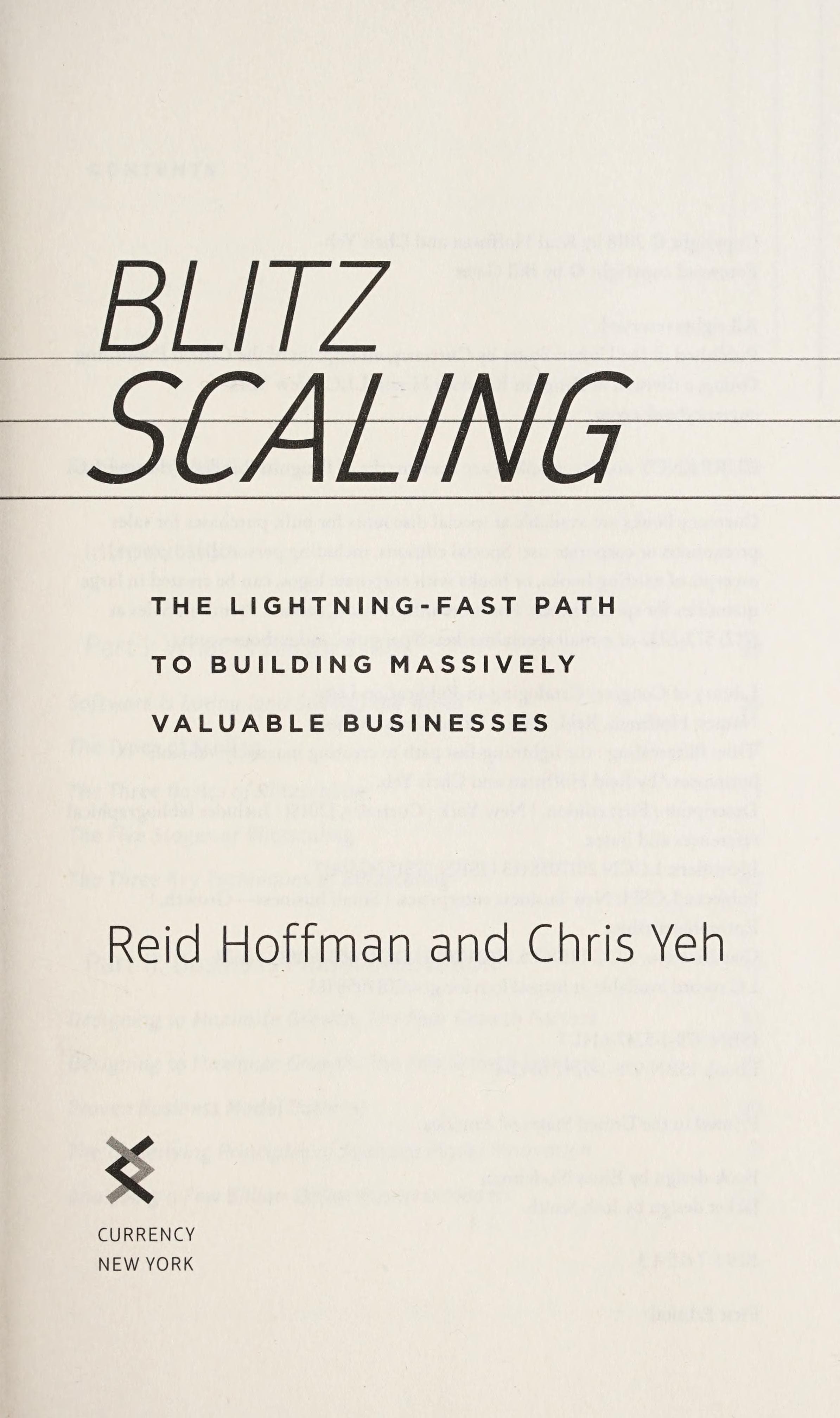
Blitzscaling: The Lightning-Fast Path to Building Massively Valuable Companies
The Lightning-Fast Path to Building Massively Valuable Companies
This book defines blitzscaling as a set of strategic practices that prioritize speed over efficiency in an environment of uncertainty to achieve massive scale. It provides a framework for navigating the organizational and management transitions required as a company grows from a small startup to a global leader. The authors utilize case studies from technology giants like Amazon, LinkedIn, and Airbnb to illustrate these principles.

Masters of Scale
Surprising Truths from the World's Most Successful Entrepreneurs
Distills the counterintuitive secrets of scaling a business from a startup to a global giant. Based on the popular podcast, it features insights from legendary founders on leadership, culture, and sustainable growth.

Superagency
What Could Possibly Go Right with Our AI Future
This book explores the positive potential of artificial intelligence to expand human agency and address global challenges in education, healthcare, and productivity. The authors argue for a 'techno-humanist' approach that views AI as a tool for individual empowerment rather than a threat to human labor.